Performance Marketing: The Smartest Way to Grow Your Business in 2025
Introduction
In today’s competitive digital world, businesses don’t want guesswork — they want measurable results. Traditional marketing spends money on visibility, but performance marketing focuses on results, such as leads, sales, clicks, and conversions. You pay only when the user completes an action. This makes performance marketing transparent, data-driven, and cost-effective. In 2025, it has become the backbone of online growth for startups, e-commerce brands, agencies, and enterprises.
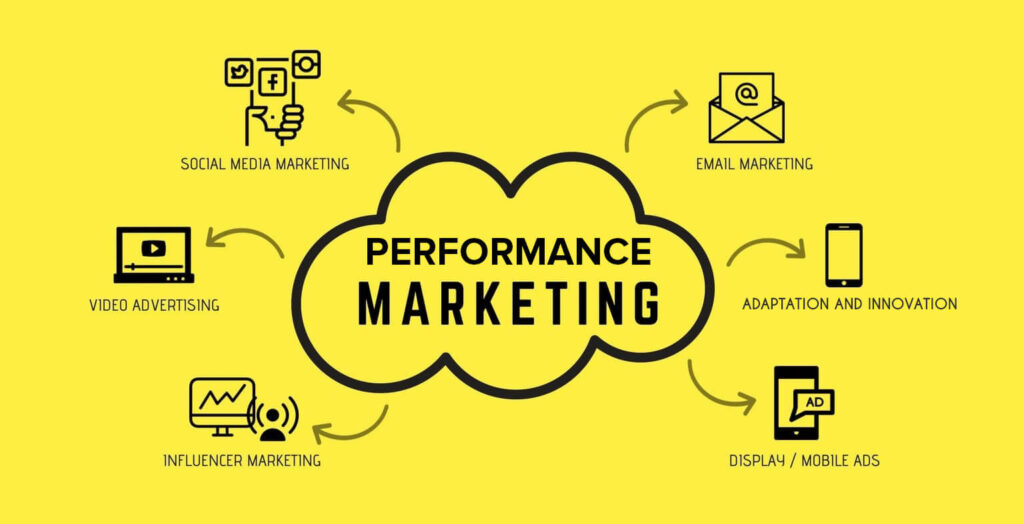
What is Performance Marketing?
Performance marketing is a digital strategy where you pay only when your campaign delivers a result.
A “result” could be:
A click
A purchase
A lead
An app install
A call
A form submission
It is measurable, scalable, and designed to maximize ROI.
Simple line:
Traditional marketing pays for exposure. Performance marketing pays for outcomes.
How Performance Marketing Works
Performance marketing follows a workflow:
1. Set Clear Goals
Decide what you want: leads, sales, or traffic.
2. Choose Platforms
Popular channels include:
Google Ads
Meta (Facebook & Instagram)
LinkedIn Ads
YouTube Ads
Influencers
Affiliate networks
3. Create Ads & Landing Pages
High-quality creatives and strong landing pages bring better conversions.
4. Track Performance
Use:
Pixels
UTMs
Google Analytics
Google Tag Manager
5. Optimize Continuously
Test different audiences, ads, budgets, and pages.
6. Scale the Winning Campaigns
Increase budget on high-performing ads for faster growth.
Types of Performance Marketing
1. PPC (Pay-Per-Click)
You pay when someone clicks.
Used on Google, YouTube, Meta, LinkedIn.
2. Social Media Ads
Targeted ads on Instagram, Facebook, LinkedIn, TikTok, etc.
3. Affiliate Marketing
Pay partners only when they generate sales or leads.
4. Influencer Performance Campaigns
Influencers get paid based on measurable results.
5. Display & Native Ads
Banner ads and in-content ads that increase brand visibility and conversions.
Key Metrics You Must Track
CPC (Cost Per Click)
CPL (Cost Per Lead)
CPA (Cost Per Acquisition)
CTR (Click-Through Rate)
ROAS (Return on Ad Spend)
Conversion Rate
CPM (Cost Per 1000 Impressions)
These metrics help you know what’s working and what needs improvement.
Benefits of Performance Marketing
✔ You pay only for results
✔ Highly measurable and transparent
✔ Fast and scalable
✔ Cost-effective
✔ Targets the right audience
✔ Improves overall ROI
✔ Real-time data for decision-making
This is why brands prefer performance marketing over traditional marketing.
Best Strategies for 2025
1. Precision Targeting
Use audience segments like:
Cold audience
Website visitors
Warm leads
Existing customers
2. Retargeting
Show ads to users who visited but didn’t buy.
This boosts conversions dramatically.
3. Better Landing Pages
A good landing page includes:
A clear headline
Benefits
Images or videos
Social proof
Strong CTA
4. A/B Testing
Test different creatives, CTAs, or audiences.
5. Creative Refresh
Regularly update ad creatives to avoid fatigue.
6. AI Automation
AI helps improve targeting, bidding, and personalization.
Common Mistakes to Avoid
Targeting too broad
Poor creatives or low-quality ads
No retargeting
Not using tracking pixels
Slow or weak landing pages
Ignoring analytics
Avoiding these mistakes improves performance and lowers cost.
Conclusion
Performance marketing is the most powerful way to drive measurable business growth in 2025. It ensures every rupee spent brings results—whether it’s leads, clicks, or sales. With the right strategy, creative assets, tracking, and optimization, any business can scale rapidly and outperform competitors. As digital marketing continues to evolve, performance marketing will stay at the center of business success.